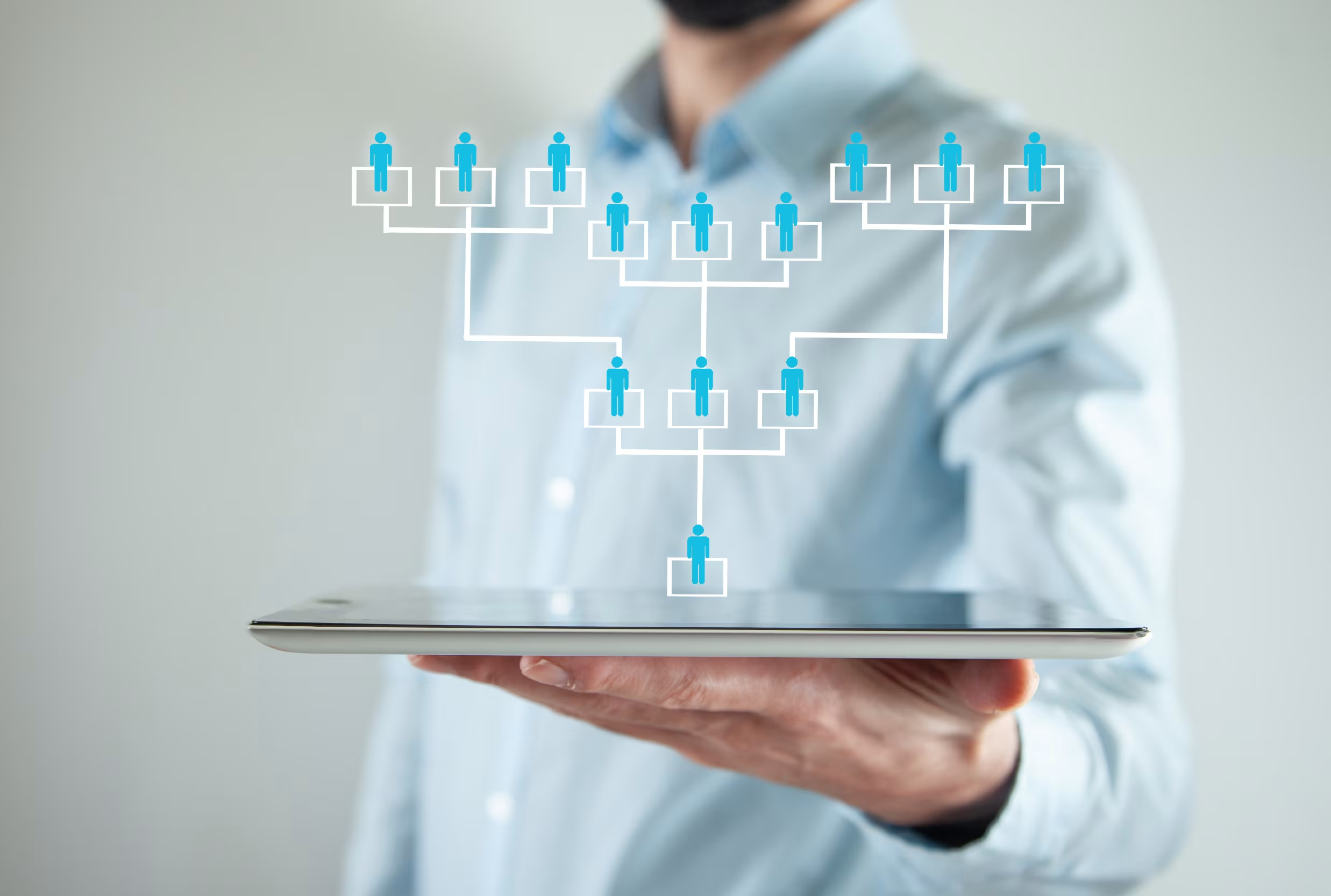

TLDR: Behavioral Segmentation in E-commerce
- What It Is: Groups customers by actions, motivations, and habits.
- Why It Matters: Improves personalisation, budget use, retention, and forecasting.
- Segmentation Types: Covers loyalty, usage, occasions, benefits, journey stage, and more.
- Brand Examples: Olay, BabyCentre, and Guinness use behaviour-based targeting.
- How To Implement: Use data, personalise campaigns, A/B test, and automate with AI.
- AI Agents + Segmentation: AI agents deliver real-time insights, personalised offers, and better support.
How do you ensure customer experiences in your e-commerce business meet customer preferences?
E-commerce personalisation is now the foundation of success. Customers are now provided with such an unlimited sea of options that they rightly demand that brands know them as individuals.
Now, how does a brand offer that? They need to know their customers beyond just their demographic and geographic data. Here's where behavioural segmentation comes.
By segmenting customers according to their activity and behaviour, e-commerce companies can send more impactful marketing messages to every group.
In this article, let us explore what behavioural segmentation is and how to build effective behavioural strategies.
What Is Behavioural Segmentation?
It is a marketing technique that groups customers based on their usage patterns, past behaviours, responses to promotional offers, and perceived benefits.
- • Compared with conventional segmentation methods, which are more often based on the analysis of relatively constant parameters such as age or gender, behavioural segmentation is interested in the actions.
- • It needs to cause consumers to behave in a certain way. This approach reveals who the buyer is, how this buyer thinks, and why they purchase products or services.
In e-commerce, behavioural segmentation is more helpful since it enables the brand to get closer to customers whenever they are in the buying process.
Let us understand it with an example. E-commerce customers who abandon their carts should be approached with discounts for the products in their carts. This will help you re-engage them and improve customer satisfaction. At the same time, customers who have stopped purchasing for a while can be re-attracted through limited-time deals and sales.
In short, your approach should vary according to their behaviour even though you are trying to re-engage customers. This level of precision is only possible through behavioural segmentation.
What Do You Mean By Behavioural Segmentation?
As the name suggests, behavioural segmentation is a method of segmenting customers based on their behaviour. It is an analysis strategy that studies consumer behaviours, why they do specific things, and how.
Demographic segmentation may divide customers by age, geographical location, and other similar factors, but behavioural segmentation divides them by their attitudes towards your product. This more profound level of analysis helps brands construct interesting and informative campaigns.
In simple terms, behavioural segmentation answers questions like:
- • What motivates the customers to choose one product over the other?
- • What makes them buy?
- • How often do they interact with your site, products, and services?
Therefore, this form of segmentation is invaluable when segmenting customers in e-commerce businesses since consumers' behavioural patterns can be explained.
It's about working with the logic of identifying repeated actions people make when shopping and how they interact to offer the most relevant experience to different groups of consumers.
Why Is Behavioural Segmentation Important?

 Personalization
 Budget Allocation
 Retention
 Forecasting
Focusing on behavioural segmentation is essential to effectively personalize all marketing strategies.
Here's how behavioural segmentation can be a game-changer:
- 1. E-commerce Personalisation: This allows brands to create personalised marketing messages, promotions, and customer relationships. For instance, a regular buyer of environmentally friendly products could be targeted with suggestions and offers related to green products.
- 2. Budget Allocation: When armed with relevant customer information, a company can decide where to allocate its marketing resources. Understanding which segments are more sensitive to particular promotions helps brands channel resources to high-impact areas, making it less expensive to market the products.
- 3. Retention: Behavioural segmentation allows you to retarget existing customers on their behavioural patterns. The brand can leverage this customer behaviour pattern to interact with the customer on a need-basis, providing them with timely incentives, rewards, or even friendly reminders to increase loyalty.
For example, identifying and targeting loyal customers will help the organisation retain them through incentives. - 4. Forecasting: Evaluating customer behaviour helps e-commerce brands strategise for future needs as they determine their wants and needs. For example, if figures prove consumers of a certain demographic are purchasing more items relevant to that season's trends, brands can plan and stock those products.
Behavioural data enable the forecast for businesses' needs, ensuring customers' demands are met on time.
TechMonk: The Best Behavioural Segmentation Tool For E-commerce
Types Of Behavioural Segmentation
Behavioural segmentation is very flexible, and many methods depend on customer behaviour.
Here are the primary types of behavioural segmentation commonly used in e-commerce:
1. Purchasing Behavior:
Identifying how customers make buying decisions through purchasing behaviour segmentation is typical. To be more precise, are they involved in compulsive buying or searching for information to make a perfect purchase?
Recognising these trends allows brands to adapt their strategies by extending a one-off sale for the first kind of customer or providing detailed information for the second kind of customer, who is likely to research potential purchases before making a decision.
2. User Status
User status subdivision separates customers in line with the intake into new, active, inactive, or repeat consumers.
Each group requires a different approach. It helps you understand what new users need in terms of introduction, while old users may be interested in a 'come-back' campaign.
3. Customer Loyalty
A brand's customer base is priceless, implying that clients are willing to do business consistently and promote the brand.
Segmenting by loyalty allows brands to provide particular incentives or rebates for the garnered high-value customers.
4. Benefits Sought
This segmentation type deals with the unique features customers seek from a product or service.
For instance, some customers are interested in low prices, while others consider a high quality or environmental freedom cost. Knowing which benefits appeal to different segments helps brands target and communicate correctly.
5. Occasion or Timing
Occasion-based segmentation tries to segment customers based on the events at which they use a particular product, the occasion when they buy it, and the kind of occasions that require it.
A brand can use occasions embodied in customers to promote suitable special offers to targeted customers, creating interaction and improved sales.
6. Buyer Journey Stage
Each type of message appeals to customers in some phase of the buying process, known as the buyer journey. For example, clients may have learning needs in the awareness stage, while those on the brink of purchasing will prefer promotional codes.
The concept of segments by the stage of the journey enables brand communications to get the message right for the consumer at the right time they are receptive to it.
7. Usage
Usage frequency measures the number of times consumers engage with a particular brand. Loyalty is more critical to heavy users than to light users, for whom reactivation incentives seem more compelling.
This segmentation helps brands direct resources to ensure the interaction with each segment continues.
8. Predictive Churn Scoring
Predictive churn scoring helps spot customers who might stop buying. If they haven’t made a purchase in a while, they’re at risk. Think of it like cart abandonment, but for long-term retention. For example, an AI-powered “We Miss You” campaign could send discounts to customers who’ve been inactive.
By using data like purchase history and website visits, you can segment these customers and engage them with personalized offers before they leave.
9. Purchase Frequency
How often your customers buy matters. For low-frequency buyers, a weekly email keeps your brand on their radar without overwhelming them. For frequent buyers, offer special deals—like a discount on their next jeans purchase or complementary products.
For those in between, use offers like “Buy 2, Get 1 Free” to encourage more frequent shopping. This simple segmentation keeps customers engaged and boosts your sales.
Suggested Read: Types of Behavioural Market Segmentation in E-commerce
Behavioural Segmentation Examples
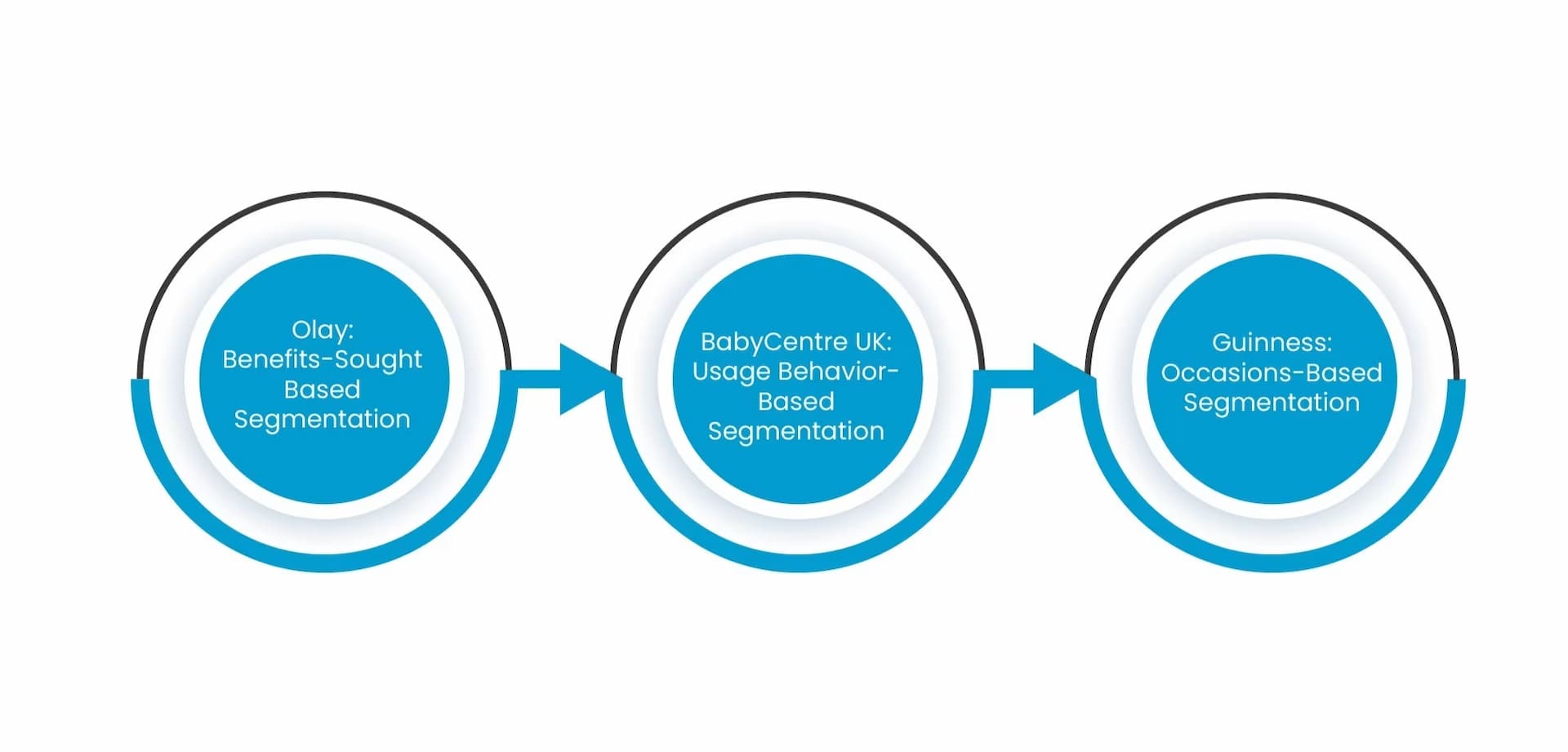
When watching an example of behavioural segmentation, it is customary to look at some of the already renowned brands that sought to apply the strategy.
These behavioural marketing examples demonstrate how companies in different sectors can apply behaviourally inspired approaches to improve their relationships with consumers and grow.
1. Olay: Benefits-Sought Based Segmentation
The Olay brand example focuses on segmenting benefits sought to satisfy various consumer demands. Regarding skincare, preferences can also significantly differ; some people want the product to help fight wrinkles, others want it to nourish the skin and moisturise, or it can be related to protection against the sun.
Olay divides its products according to these benefits and offers products to the relevant consumer groups accordingly. Customers engaged by this approach are more satisfied with Olay.
2. BabyCentre UK: Usage Behavior-Based Segmentation
BabyCentre UK is a parenting website that employs usage behaviour segmentation to target new and expecting parents with appropriate content.
BabyCentre realises users will require diverse information at various stages of pregnancy and early parenting.
3. Guinness: Occasions-Based Segmentation
Guinness's famous beverage brand powers occasions-based segmentation to push sales around particular events.
Recognising that its customers are likely to consume Guinness during celebrations, such as St. Patrick's Day or sporting events, the brand designs campaigns around these occasions.
Strategies for Implementing Behavioural Segmentation in E-Commerce
Implementing behavioural segmentation can feel overwhelming, but it becomes manageable and highly impactful with the right strategy.
Here are four effective strategies to get started with behavioural segmentation in e-commerce:
1. Leverage Data Analytics for Customer Insights
To segment customers based on behaviour, gather data from all available sources, such as website analytics, purchase history, and customer interactions. Analyse this data to identify critical behavioural patterns, like frequent purchase times, product preferences, and customer engagement levels.
2. Personalize Marketing with Targeted Campaigns
Once you have segmented your customers, personalise your AI-powered campaigns for each segment. For example, send exclusive discounts to loyal customers or special offers to new users who have yet to purchase.
3. Use A/B Testing to Optimize Messaging
Occasion-based marketing is another nutritious method Guinness, a famous beverage brand, adopted to sell its products around the occasion. A fact that needs to be kept in mind is that its patronage will drink Guinness during festive occasions like St. Patrick's Day or watching a game of rugby, which is how Guinness positions its campaigns around such events.
4. Implement Automated Segmentation with AI Tools
This means that automating the data segmentation process may not be effective for e-commerce brands that process a lot of data. AI tools that adapt segments on the fly as customers' behaviour evolves can perform the often complex behavioural segmentation.
This way, creating a seamless and personalised marketing experience at scale is more manageable as the possible emerging patterns of customer behaviour can be noticed and addressed with appropriately tailored marketing actions much quicker with the help of automated segmentation.
How AI Agents Deliver Exceptional CX Thanks to Behavioral Segmentation
Behavioral segmentation helps your AI agents understand different customer behaviors and preferences across many touchpoints. You look at how customers browse, buy, and interact with your store. This gives your AI agents the insight they need to tailor their actions for each segment. You might wonder how this works in daily customer interactions.
- • Personalised Recommendations : Your AI agents study browsing history, purchase patterns, and the time a customer spends on certain categories. They use this to suggest products that match the customer’s taste. You guide them toward items they already feel drawn to, which makes buying easier and more satisfying.
- • Personalised Offers : Segmentation helps your AI agents create offers that feel right for each customer. What if someone always looks for discounted items? Your AI agents can show exclusive discounts that match that habit. You build trust through these small but thoughtful actions.
- • Upsell and Cross-sell : Your AI agents use behavioral segmentation to choose the right moment to suggest more. A customer buys a product, and your agent recommends something that pairs well with it. These suggestions flow naturally because they follow the customer’s behavior.
- • Conversion Drop-off Recovery : Behavioral segmentation helps your AI agents spot when a customer might leave a page or abandon a cart. You act before they exit. Your agents send the right message at the right moment and bring them back into the buying journey.
- • Enhanced Customer Support : Your AI agents study past purchases, earlier queries, and customer interactions. They use this to step in before issues grow. You help customers earlier and make their support experience smoother and more predictable.
- • Behavior-Based Messaging : Once you segment your audience, your AI agents adjust the tone and style for every group. A customer who reads newsletters often receives a different message than someone who shops only once in a while. This keeps your communication relevant and lifts engagement and loyalty.
AI Agents for Segmentation: The Future of Behavioral Marketing
AI agents for customer segmentation study behavior, demographics, and interactions. They analyze large amounts of data and group customers based on shared traits. This helps your AI agents create personalised experiences for each segment.
Benefits of Using AI Agents for Customer Segmentation
- • Scalability : Your AI agents handle large datasets with ease. They adjust to changing customer behavior across multiple touchpoints and scale as your store grows.
- • Real-Time Segmentation : AI agents study customer actions in real time. They adapt instantly when behavior shifts and help you respond to needs right away.
- • Enhanced Personalization : Your AI agents deliver personalised journeys with custom messages, offers, and recommendations. This increases engagement and lifts conversion rates.
- • Increased Efficiency : Automation takes away the need for manual analysis. You save time and focus your energy on ideas, strategy, and decision-making.
- • Data Driven Insights : Your AI agents segment customers and show why certain preferences or habits appear. You use these insights to make smarter decisions based on real behavior.
TechMonk: AI Agents at the Forefront of Innovation
TechMonk is one of the best AI agents for e-commerce . It gives you a next level platform that helps you build strong AI Capital. AI Capital works like a flexible portfolio of AI agents and intelligent software. These agents understand your tasks, make decisions, and take action inside your workflows. They learn from every interaction and improve over time. This keeps your operations smooth and more effective.
The platform comes with prebuilt ecommerce AI agents. You can also create and customise new ones based on your needs. You get the freedom to build the exact setup you want. With the right mix of AI agents, you automate important operations across many workflows. Each agent handles a specific task so your entire system runs without friction.
Smart Pre-Built AI Agents Ready for You
TechMonk’s prebuilt AI agents help you automate important operations in ecommerce and other industries. You may wonder which agent fits your needs, so here is a clear breakdown.
- • AI Sales Agent : TechMonk's AI Sales Agent works like a digital sales representative. It stays focused on closing sales for your ecommerce store. It studies customer data and guides shoppers toward products that match their interests. It also answers their questions so they enjoy a smooth shopping experience.
- • AI Support Agent : TechMonk’s AI Support Agents support your customers with clear and helpful interactions. They answer questions, guide users to the right solutions, and give accurate responses. This makes self service easier and keeps your customers satisfied.
- • Voice AI Agent : This agent gives you natural, human like conversations with your customers. You can run it across PSTN and WhatsApp calls. It offers different voices and personalities that match your brand tone. It also gives you 24 by 7 support and manages customer follow ups without delay.
Want to Build an AI Agent for Segmentation
When prebuilt agents do not cover everything you want, TechMonk’s Agent Builder gives you the power to create custom AI agents. You design them to match your workflows, support tasks, and exact goals.
- • Tools Library : TechMonk gives you a ready set of tools to begin with. You can also create your own tools whenever you need something specific. These tools let your AI agents take real actions like raising support tickets or completing customer requests.
- • Agent Library : You can explore a wide range of prebuilt AI agents for different engagement needs. When you want something more tailored, you can build an agent that fits your brand and your purpose.
- • Agent Flow : TechMonk makes all your AI agents work together without breaks. It assigns the right agent for the right task. This keeps your responses fast, accurate, and relevant.
How TechMonk Ensures Your AI Agents Perform Well
TechMonk supports your AI agents with smart features that keep them reliable. Each feature adds safety, accuracy, and strong performance. You might wonder how they maintain this level of control. Here is how it works.
- • Guardrails : Guardrails keep your AI agents focused on safe and correct responses. They block wrong or harmful replies and protect your system from prompt hacking. This keeps your conversations secure at all times.
- • Observability : You can monitor your AI agents in real time. You watch how they interact with customers and check the quality of their responses. This helps you find improvement areas quickly.
- • Traceability : TechMonk records every action your AI agents take. You get full accountability and a clear way to study patterns that help you improve performance.
- • Tracking AI Agent Performance : TechMonk gives you detailed analytics about how your AI agents perform. You use this data to fine tune them and increase their accuracy.
- • Testing Automation : Automated testing checks your AI agents before launch. It identifies issues early and ensures they work exactly as expected.
Why TechMonk Leads the Game
TechMonk stands out because it offers a full stack customer engagement toolkit. This toolkit powers its AI agents and strengthens everything they do.
Boost The Effectiveness of Your Campaigns By Targeting The Right Customers.
Takeaway
Regarding e-commerce marketing, don't be fooled: behavioural segmentation is not simply the latest buzzword — it's a valuable approach that can help brands understand their customers even more profoundly.
Using customer behaviours, choices, and needs, companies can design promotional activities that improve customer relations, convert them into repeat buyers, and make them loyal.
Whether offering solutions based on the benefits sought or launching campaigns for a particular event, behavioural segmentation gives businesses complete control over their decisions, making them people-friendly.
FAQs
What are four types of behavioural segmentation?

How does behavioural segmentation benefit e-commerce brands?
What's the difference between behavioural segmentation and demographic segmentation?
What exactly is behavioural segmentation in e-commerce?
Why is behavioural segmentation important for e-commerce businesses?
What role does customer loyalty play in behavioural segmentation?